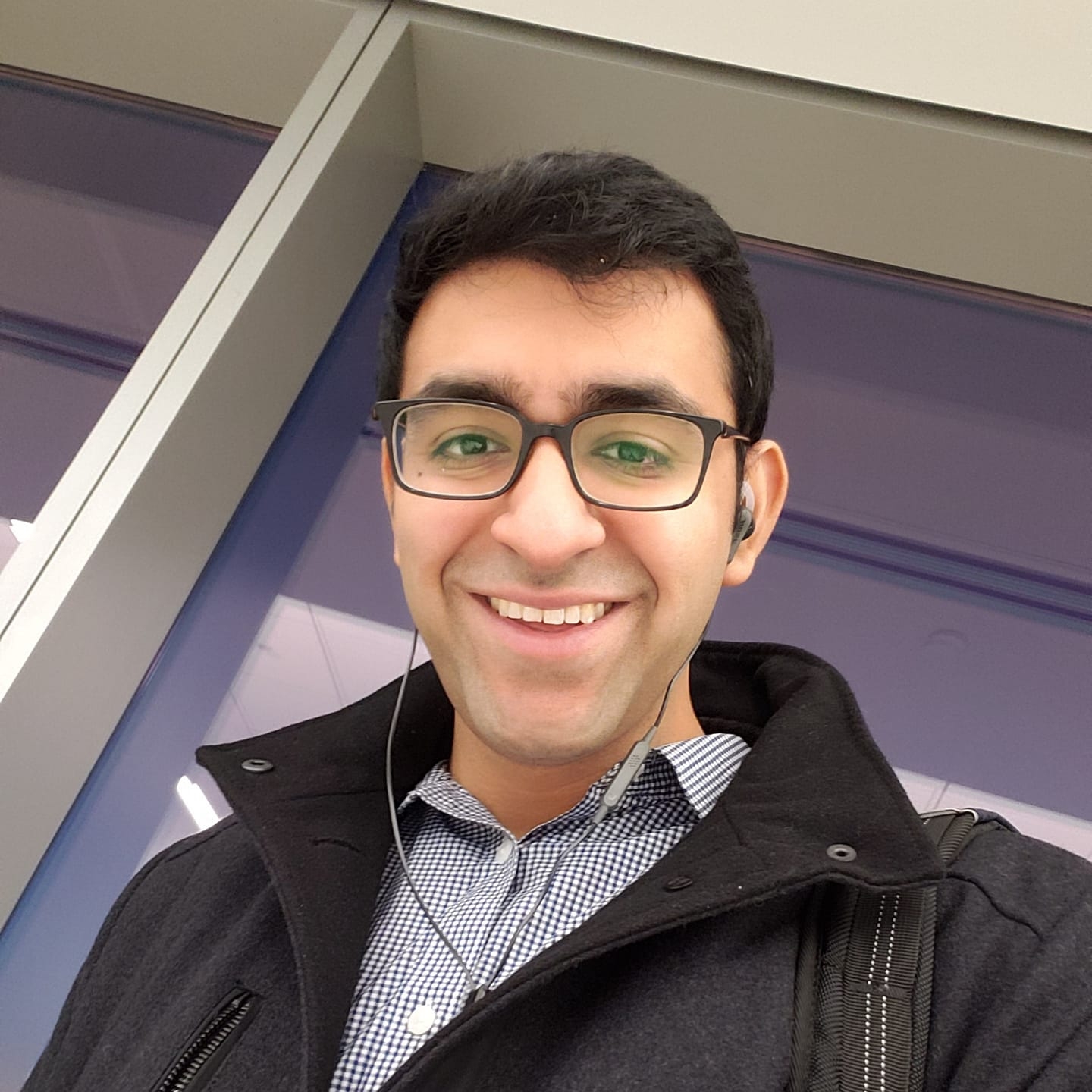
I'm an applied scientist specializing in computer vision and multimodal learning. I develop vision-centric AI systems that perceive and reason about physical environments for safety-critical decision-making and injury risk modeling.
I earned my PhD in Neurobiology from Duke University, where I worked with Stephen Lisberger and Marc Sommer to study the cerebellum’s role in planning and controlling eye movements. This research introduced me to a control-theoretic perspective on motor control and active perception—emphasizing state estimation, feedback, feedforward control, and adaptive learning in closed-loop systems—which continues to shape my approach to problems in robotic vision and control.
Building on this foundation, I became a postdoctoral associate at NYU’s Center for Neural Science in Tony Movshon’s lab, where I treated perception as an inverse problem. My research combined behavioral psychophysics, neurophysiological recordings, and computational modeling to explore how visual information is encoded and decoded in cortical populations, with a focus on motion and scene perception. I also led translational projects optimizing clinical ECoG arrays and investigated the neural basis of amblyopia by relating perceptual deficits to cortical representations. This training established my approach: iterating between models, data, and measurement to build quantitative links across levels of analysis.